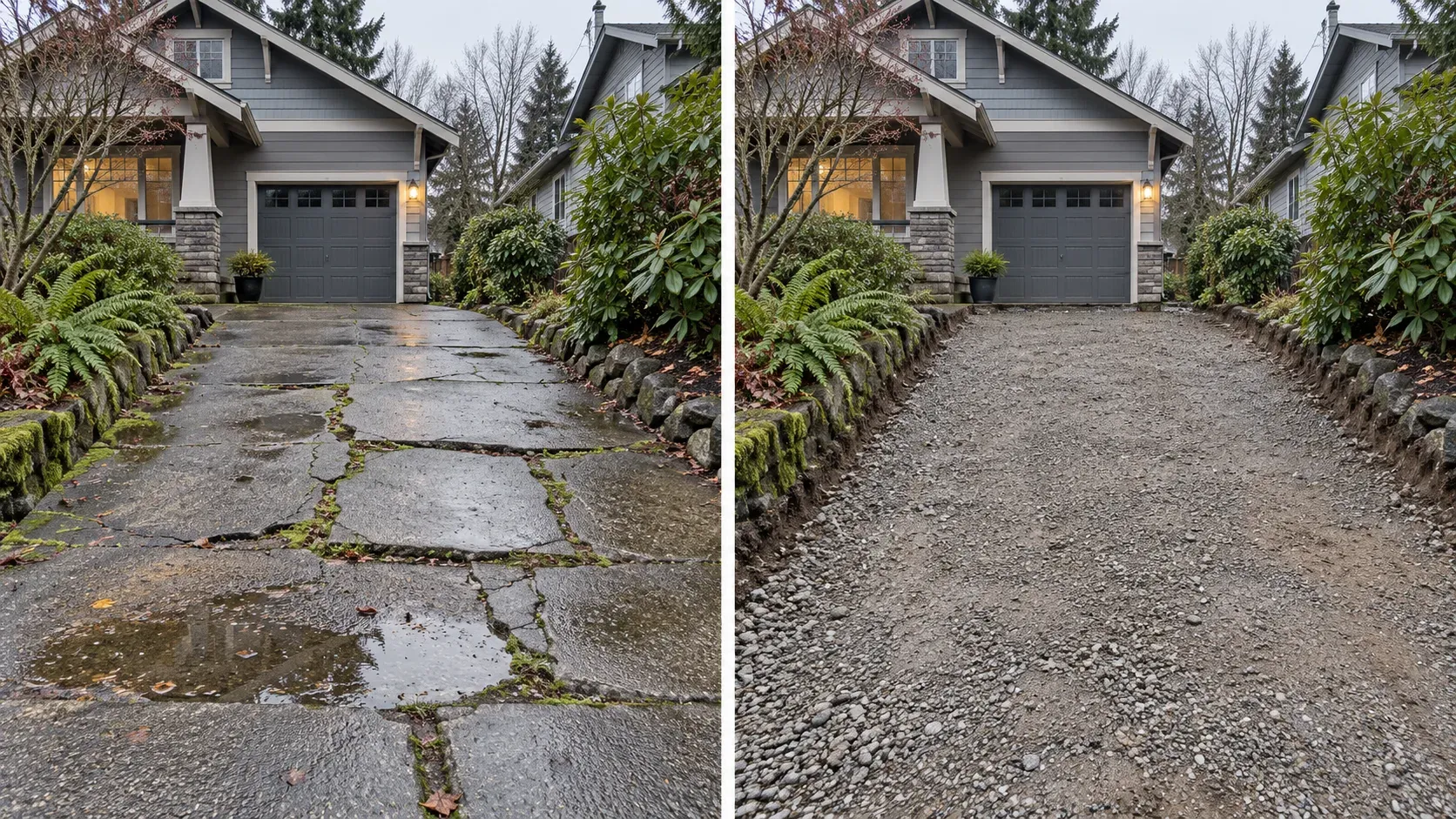
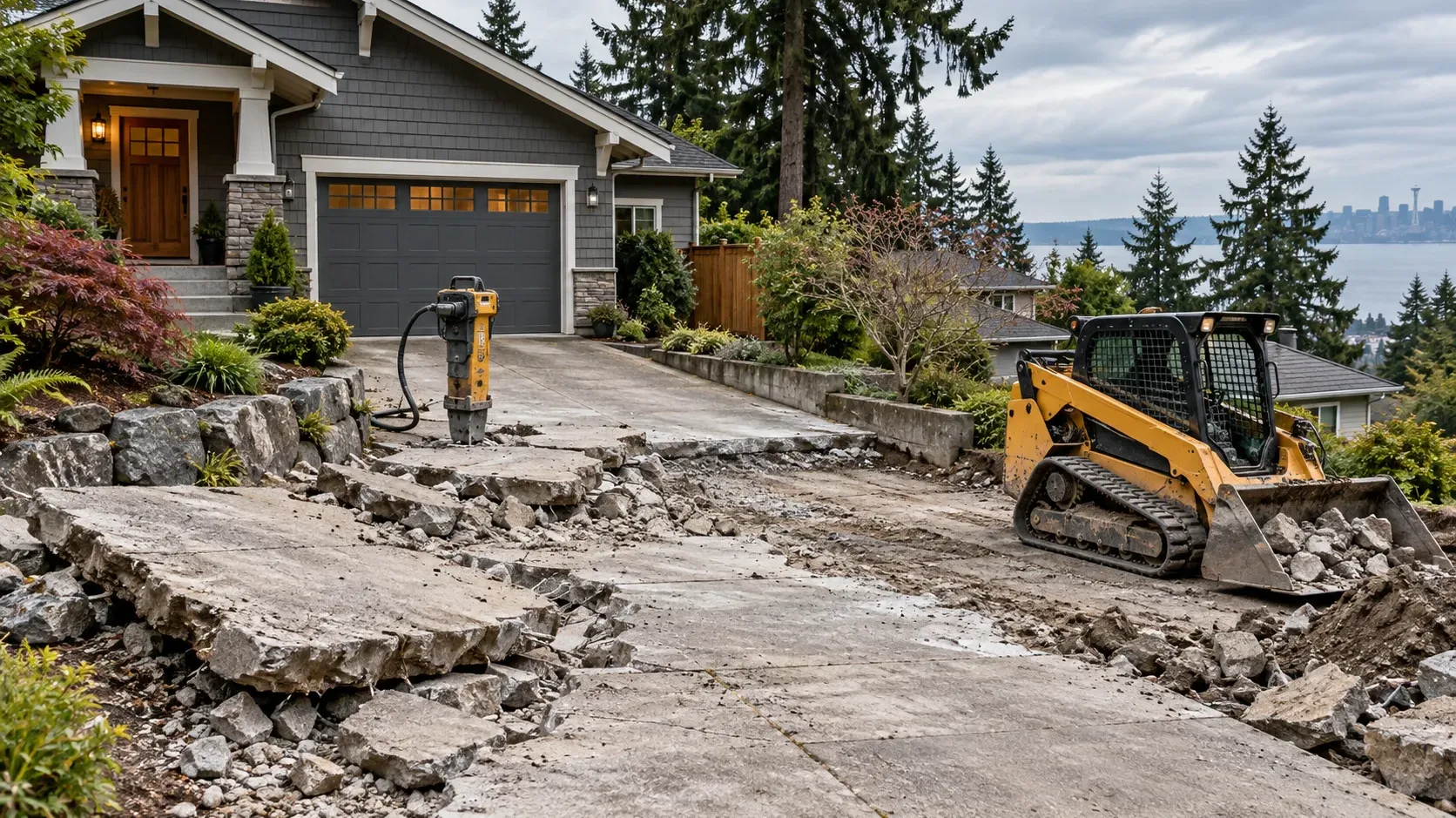
Cracked concrete driveway being broken out beside a Seattle home

Concrete demolition · Seattle, WA

Concrete removal in Seattle, with the next step in mind.

Clear a failing driveway, patio, walkway, or slab with a plan for access, nearby structures, debris haul-off, and the exposed ground. We define the removal limits and handoff before breaking concrete.

Plan the tear-out

Concrete demolition in Seattle starts with what needs to stay.

A clean removal is more than breaking a slab. The work may stop at a garage apron, meet a sound walkway, pass close to a foundation, or travel through a narrow side yard. Those boundaries determine where we cut, which equipment can fit, and how pieces leave the property.

We also ask what comes next. A new driveway needs a different handoff than a garden bed or a contractor's future patio build. Reviewing access, utilities, reinforcement, runoff, and the ground below the concrete helps make the scope clear before demolition begins.

01 / LimitsThe exact slab, cut line, and adjoining surfaces to protect.
02 / AccessEquipment path, gate width, loading distance, and truck position.
03 / HandoffHaul-off, exposed ground, and preparation for the next phase.
Plan my removal
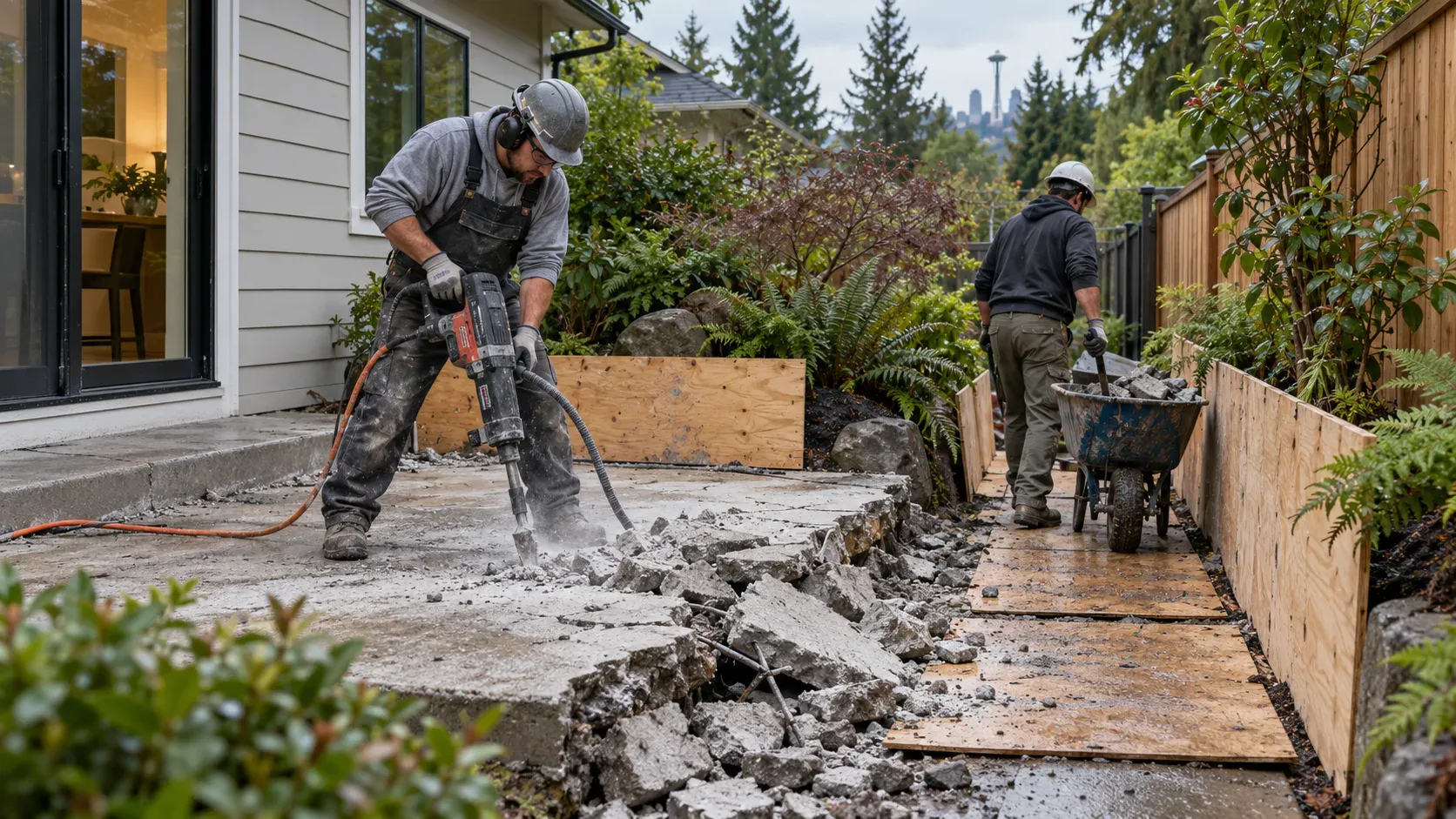
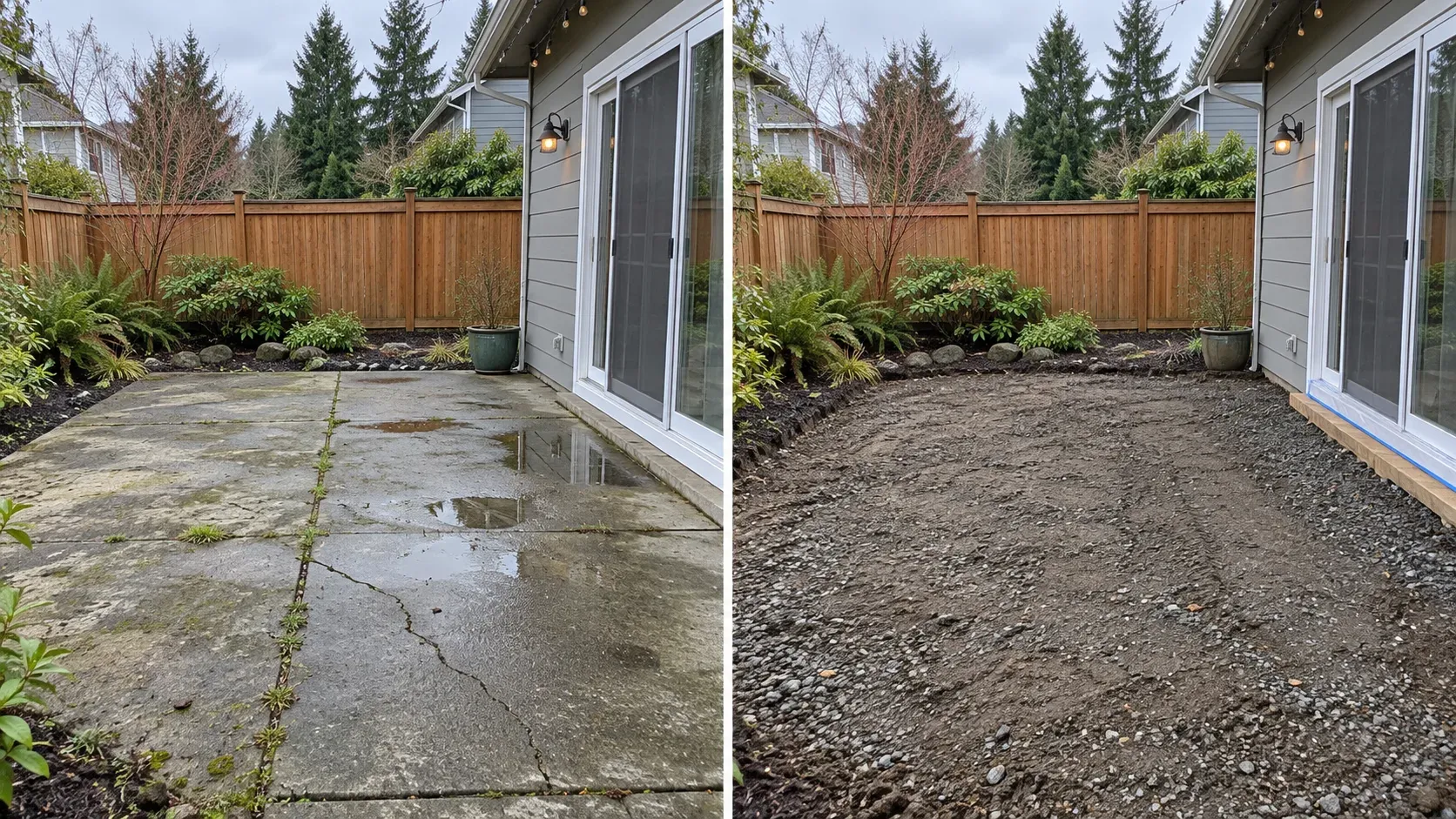
Concrete crew breaking an old backyard patio and moving pieces through a side yard
Backyard access can shape the demolition and haul-off plan.

What we remove

Driveway, patio, walkway & slab removal.

The concrete type matters, but the edges, access, and destination matter just as much.

Make way for the next surface

Driveway removal

Remove a failed driveway without treating the garage threshold, adjoining walk, or street connection as an afterthought.

Scope review
  • Removal limits and edge cuts
  • Vehicle and truck access
  • Reinforcement and slab depth
  • Base condition after tear-out
Discuss this scope
Open up the backyard

Patio & walkway removal

Clear old outdoor concrete while planning around narrow gates, planting beds, doors, and the route to the truck.

Scope review
  • Gate and side-yard access
  • Protection near the house
  • Partial or full removal
  • Debris loading route
Discuss this scope
Clear an existing footprint

Slab & pad removal

Break out an unused shed pad, parking area, or nonstructural slab so the space can serve a new purpose.

Scope review
  • Footprint and thickness
  • Embedded mesh or rebar
  • Nearby utilities and structures
  • Intended condition at handoff
Discuss this scope

Choose the extent

Selective concrete removal or full tear-out?

Keep a sound section when the boundary makes sense. Remove the whole surface when failure or the next layout reaches beyond a small area.

01Selective removal

Keep the stable section.

A defined cut can make room for a repair, utility work, or a new connection while preserving concrete that still serves the property.

  • Clear separation from the area to remain
  • Sound adjoining concrete and edges
  • A workable plan for reinforcement and joints
02Full removal

Reset the entire footprint.

When cracking, settlement, drainage, or a new layout affects the whole surface, full removal lets the next phase begin from exposed ground.

  • Movement or breakage across multiple panels
  • Recurring ponding or an unsuitable grade
  • A planned change to the footprint or use

Seattle-specific planning

Protect the site. Route the concrete correctly.

Removal can affect buried services, neighboring surfaces, runoff, and the handling of a heavy waste stream. The plan should account for each before equipment arrives.

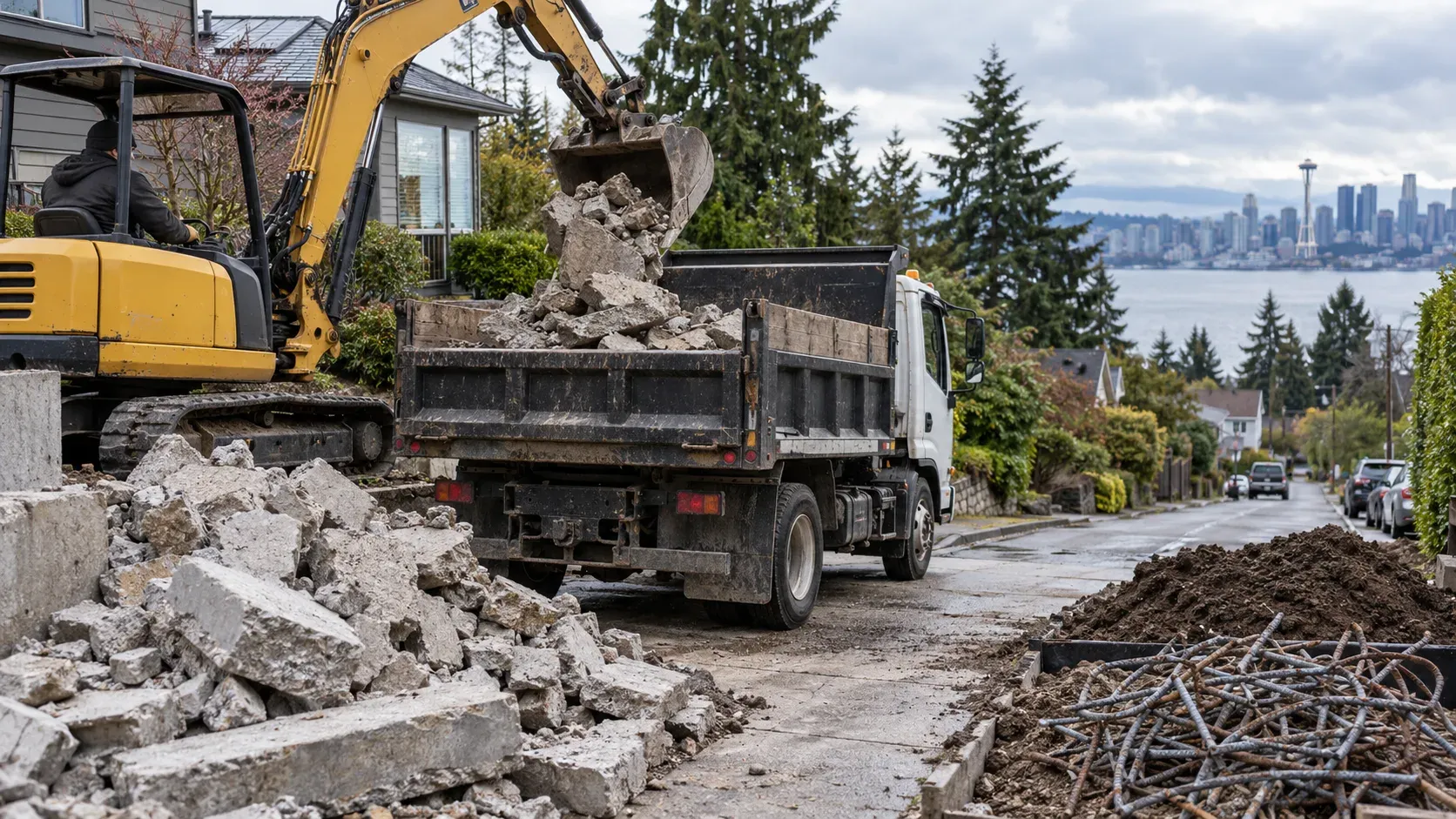
Broken concrete being loaded into a dump truck for haul-off
01 / Utilities

Know what is below.

We review utility information and the limits of ground disturbance. Washington 811 is the starting point for public utility locates; private lines may need separate attention.

02 / Material

Separate and haul.

Seattle lists concrete among materials banned from ordinary disposal, subject to stated exceptions. The scope should identify loading, hauling, and the appropriate receiving route.

03 / City review

Check the location.

Work tied to a building, sidewalk, curb, utility, or substantial grading can have requirements beyond private flatwork. We review the actual scope against city guidance before scheduling.

The removal sequence

How the slab comes out without losing the boundary.

Cutting, breaking, and loading are chosen for the concrete and the surrounding property.

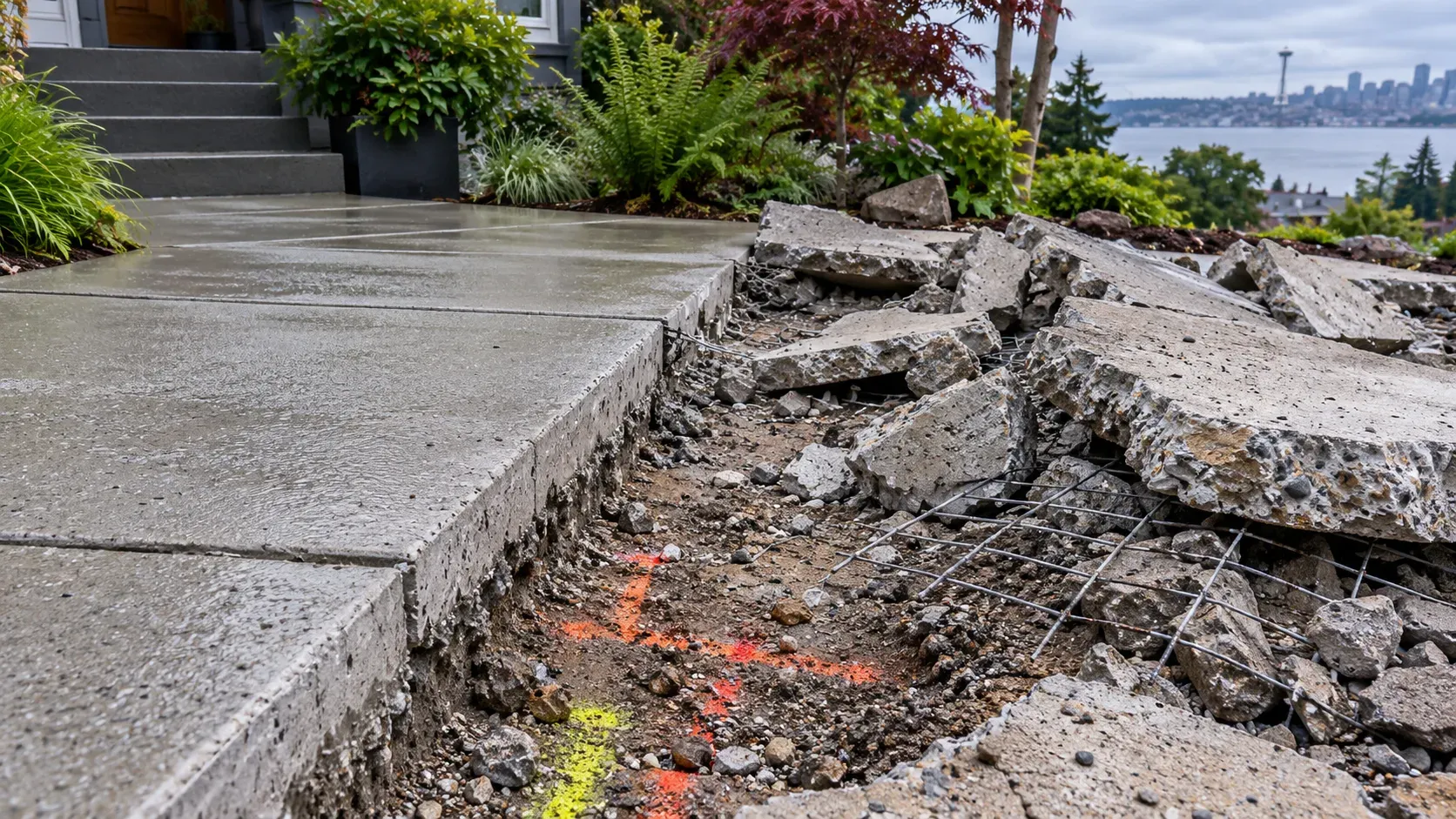
Sawcut edge beside broken reinforced concrete near a residential walkway
01 / Define

Cut the edge

A controlled boundary helps separate the slab being removed from concrete and structures that remain.

Workers breaking and moving pieces of an old residential concrete patio
02 / Break

Match tools to access

Slab thickness, reinforcement, and the route through the property determine the practical equipment plan.

Concrete pieces being loaded for transport from a residential demolition site
03 / Clear

Load and haul off

Debris handling and the final condition of the site belong in the estimate, not as an assumption.

Our process

How a concrete removal project moves forward.

Each step makes the next trade or use of the space easier to plan.

  1. 01

    Define the removal limits

    We review what stays, what goes, slab thickness, reinforcement, access, nearby structures, and the intended next use.

  2. 02

    Plan the work zone

    The scope considers utility information, protection for adjoining surfaces, equipment fit, debris route, and any city review.

  3. 03

    Cut, break & load

    Where the site calls for it, boundaries are sawcut before concrete is broken into pieces that can be moved out safely.

  4. 04

    Haul off & hand over

    The proposal spells out debris hauling and the agreed condition of the exposed ground for the next phase.

Clean cut line marking the edge of concrete selected for removal

A defined handoff

Why choose Seattle Concrete Buddies for removal?

More than 20 years of industry experience informs how we assess concrete work. For demolition, the important questions are what to protect, how to get the material out, and what the cleared area must be ready for next.

We discuss those limits and site constraints before defining the quote, so you can compare the actual removal scope rather than just a price for breaking concrete.

  • Clear boundariesKnow the surfaces included and where the removal stops.
  • Access in the planEquipment and debris movement fit the property.
  • Next-phase clarityThe handoff describes what happens after haul-off.
Call (206) 589-5062

Understand the estimate

What affects concrete removal cost in Seattle?

A small patio behind a narrow gate may take a different approach than a larger driveway beside the street. The bid should connect the price to the actual work and haul-off.

Request a site-based estimate
Removal scope / Seattle, WAWhat your estimate should account for
01 · Concrete volume
Footprint, slab thickness, footings, and reinforcement.
02 · Boundary work
Sawcuts and protection where concrete remains.
03 · Access & haul-off
Equipment fit, loading distance, truck trips, and material handling.
04 · Handoff condition
Debris cleanup and any agreed ground or base preparation.

Ask what remains on site when the crew leaves.

Straight answers

Concrete removal FAQs for Seattle properties.

Scope, access, haul-off, recycling, permits, and the condition after tear-out.

How much does concrete removal cost in Seattle?

The amount of concrete is only one part of the estimate. Thickness, reinforcement, sawcutting, access to the work area, loading distance, hauling volume, and what condition you need at handoff all affect the scope. We review the site before pricing the work.

Does a concrete removal quote include haul-off?

Ask for removal, loading, transportation, and the destination or recycling plan to be stated in the proposal. Our site-based estimate identifies the work included so you can compare bids without guessing whether the rubble will remain on your property.

Can you remove only part of a concrete slab?

Selective removal may be possible when a sound section can stay. The cut line, reinforcement, edge stability, adjoining structures, and future surface all matter. We review where a clean boundary can be made before defining a partial tear-out.

What concrete surfaces can be removed?

Common residential work includes driveways, patios, walkways, parking pads, and shed or garage-area slabs. Structural foundations, retaining walls, and work connected to a building require a separate scope review and may involve different permits or specialists.

How do you remove concrete from a backyard with narrow access?

A narrow gate or long side yard changes the equipment and loading plan. Smaller tools and hand-moving material may be needed when a compact loader cannot reach the slab. We measure access before deciding how to break and move the concrete.

What happens to removed concrete in Seattle?

Seattle bans clean concrete and other targeted construction materials from disposal in ordinary garbage containers, with exceptions for contaminated or hard-to-separate material. The disposal route should fit the actual debris. We discuss separation and haul-off in the project scope.

Do I need a permit to remove concrete?

Permit needs depend on the work, especially if it affects a building, utilities, a street or sidewalk, grading, or the public right-of-way. We review the location and intended next use against Seattle guidance before the removal plan is finalized.

Should utilities be located before concrete demolition?

Any work that may disturb the ground should account for buried services. Washington 811 is the starting point for locating public utilities; private lines can require separate attention. The site review considers where cuts, breaking, and equipment travel will occur.

Will the site be ready for a new driveway or patio?

Removal exposes the ground; it does not automatically create a finished base. The proposal should say whether rough cleanup, excavation, grading, compacted base, or new concrete is included. We define that handoff so the next contractor or phase knows what to expect.

How long does concrete removal take?

A small accessible slab and a reinforced driveway behind tight access have very different work and hauling demands. We discuss sequence and scheduling after measuring the area, reviewing reinforcement and equipment access, and identifying any permit-sensitive work.

Tell us what must go

Request a concrete removal estimate.

Share the address, surface type, approximate dimensions, photos, access path, nearby structures, and what you plan to do with the cleared area. We will follow up about a site review.

Phone(206) 589-5062Service areaSeattle and nearby communitiesHoursMonday–Sunday · 7:00 AM–7:00 PM

Free, no-obligation estimate

Tell Us About Your Concrete Project

Share a few details and an email draft will be prepared for our team.

Your contact information
Your project details

Prefer to talk? Call (206) 589-5062.